Showing posts with label obamacare. Show all posts

Thursday, June 28, 2012

A political post: Obamacare, the Silver Linings

Yes, I'm disappointed.  But, as there is no point in whining and complaining about this decision or getting into debates with Facebook friends or unknown persons on other online fora (as wrong as they are), I'm going to focus on what good things can be garnered from it.  Here they are in no particular order.

1)  The Commerce Clause does have limitations.  Even though Roberts conceded that the mandate can still be  mandated by Congress' taxing power (yes, I know that it was never defended as a tax and yes, this screams of judicial activism since the court invented a way for it to be implemented rather than rely on how the law was written), Roberts concurred with the dissenters that the commerce clause cannot be used as the justification for any government intrusion into the private sector.  Of course, all this does is give Congress the hint that if they do want to regulate anything, just make it a tax instead.  But considering that taxes now, especially in this state of the economy, are a non-starter, I don't think I will see Congress in the future mandating a broccoli tax on people who don't purchase and eat broccoli.

2)  The base is energized.  Republicans were always lukewarm on Romney.  Now, they're all in behind him.  Forget the divisive Republican primary--it's history.  Romney has promised repeal.  Every single Congressional and Senate candidate who wants to save his job come November had better come out in favor of repeal or at least consider it.  People do not like this bill.  Most people couldn't care less if the mandate is enforced via the commerce clause or the taxation authority of Congress. They don't want to purchase something they may not need.

3)  There is a revival of interest in the Constitution and what it actually says.  Can anyone remember the last time the Constitution was talked about by non politicians and non constitutional lawyers at any time prior to an election?  I can't.  Who has ever recalled the commerce clause or the general welfare clause or the elasticity clause being talked about at dinner conversations or by people sharing a beer at a baseball game?  Obamacare has been an impetus for learning about what it is in the Constitution.  Granted, many people are being duped by liberals who actually think the Constitution only means what it says in certain parts when it agrees with their utopian vision, but at least that's a base to work from. 

4)  Roberts is not quite the boogeyman in all of this.  It's easy (and fun) to hate Roberts for his role in all of this, but consider these:  First, he essentially told the Republicans what to run on and gave them a winning issue.  He said that it isn't for the court to decide what's good policy and what's not.  We've made our decision. Grow a pair and get out to repeal it yourselves instead of trusting us with that job.  Poll after poll reveals that Obamacare is unpopular and that 2/3 want it repealed in full or in part.

Secondly, Roberts did trumpet originalism.  Though his ruling seems to be a far cry from originalism, notice how he dresses down Ginsburg who is one of those justices who feels the Constitution means only what she wants it to mean at any given time.  In this case (footnote 4), Roberts is addressing Ginsburg's ridiculous contention that regulation pertains to activity and inactivity.  Here's more:


JUSTICE GINSBURG suggests that “at the time the Constitution was framed, to ‘regulate’ meant, among other things, to require action.” But to reach this conclusion, the case cited by JUSTICE GINSBURG relied on a dictionary in which “[t]o order; to command” was the fifth-alternative definition of “to direct,” which was itself the second-alternative definition of “to regulate.” It is unlikely that the Framers had such an obscure meaning in mind when they used the word “regulate.”  Far more commonly, “[t]o regulate” meant “[t]o adjust by rule or method,” which presupposes something to adjust. [Citations omitted.]
I think that's a triumph (a small one, granted) for originalism.


5)  Though not explicitly stated, the 10th amendment was upheld.  States cannot be forced, i.e. blackmailed or extorted, into expanding Medicaid at the risk of the funding that currently exists.  It was interesting to hear Sen. Ben Nelson claim credit for that (remember the famous Cornhusker kickback?) although his kickback was not in the final bill.  Nelson must think that SCOTUS was looking to him and his opposition as the source for their ruling.  What a tool!


6)  Obamacare is an economic disaster.  The math speaks for itself.  Once it goes into full effect, we will see the results immediately.  We are currently in the throes of the spending debate in Washington.  The American people do not want more spending, especially since there is no supply to fund it.  Even on its most generous scoring, the CBO says that Obamacare will add billions, if not trillions to the already out of control debt.

On the private side of things, medical device companies are going to be hard hit with new taxes.  Guess who ultimately pays that price? The people who purchase them.  Whenever  the government increases the cost of doing business, the business has to recoup the costs from somewhere.  And when those businesses can't, they go out of business.  Fewer businesses, fewer jobs, less of a tax base.  Of course, liberals can't see that in their warped view.


There you go:  My six silver linings.  Let Obamacare go into effect.  Maybe, just maybe, it will serve as the impetus to return us to some sense of fiscal sanity.


A vindication for Calvinism?

I'm going to make a departure and do something I don't really want to do, at least not for this blog.  I'm going to write something that has to do with...wait for it...politics!  I hate politics; it's a waste of energy and is an exercise in compromising integrity for popularity.  But, my plan is (we'll see how successful I am) to tie it in some way back to Christianity in general and Orthodoxy in particular.

Let me start out with my thesis:  Today's Supreme Court ruling on the constitutionality of Obamacare is a vindication for Calvinist thought which is the center of modern liberal (i.e. progressive) political thought.  Let me also state very plainly that I was in no way happy with the decision this morning.  As much as this idea makes me want to throw up and to disfigure my face while saying "unclean, unclean", I am seriously going to throw all my support, whether financial (very little to give), my pen (by which I mean my keyboard) and everything else I can to support Mr.  Romney for President as well as any Congressional and Senatorial candidate who will insist on Obamacare's repeal.  Again, it sickens me. (Full disclosure:  I once was registered as a Republican but after finding out that they are nothing more than Democrat-lite, I found my home as a neo-anarchist monarchist libertarian).  Let's now get to my thesis.

Calvinism is alive and well.  Its basic doctrine can be summed up in its five points.  They are:
1)  Total depravity
2)  Unconditioned election
3)  Perseverance of the saints (once saved always saved)
4)  Limited atonement (Christ died for one person but not for another)
5)  Irresistible grace

All of these will be addressed in some way (except for perseverance) in this essay.  The concept of total depravity says that nothing about man is good.  Because of the original sin of Adam and Eve, everything about man is now crooked (the literal meaning of depravity) and twisted from its original beauty. As such, man has nothing left in him to desire God.  God must do all the action; man is passive.  Since man cannot choose the good, it must be chosen for him.

I find it ironic that a system that is so dependent upon someone else to do right for him could have built the bedrock of this nation.  Hard work and initiative and personal responsibility were cornerstones of how the Puritans and Pilgrims (though separated from the English Church, they did so under the influence of Calvinism which gained a strong foothold in Scotland) were able to transform their colonies into blossoming metropolises with commerce that became wealthy.  But in Calvinist theology, those things would be suspect if not outright condemned. 

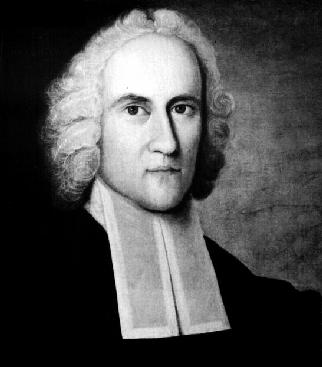
Calvinism pictures God the same way as Jonathan Edwards does in his famous sermon "Sinners in the Hands of an Angry God."  For Calvinists, God is vindictive, angry, arbitrary.  Nowhere in that sermon is any hint, any trace of the compassions or mercy of God.  Why should there be?  God's own sense of justice precludes any forgiveness or mercy, hence why Jesus only died for person A and not for person B.  You cannot do anything to cooperate with God's grace, let alone do it yourself.  God must do everything for you, whether that is to save you or condemn you.

So, what does this have to do with the ruling?  As much as progressives (I really hate the term liberal because I'm more of a liberal than they are) hate Christianity and Calvinism in particular, they are operating from the same mindset.  Progressives may not like or believe or worship God, but they certainly like to play the angry, vengeful God.  Since man is shackled by his depravity, not to sin (progressives don't believe in that), but to freedom, that freedom must be curtailed to the point of not having any (I grant that I am assuming that Obamacare is, by its nature, tyrannical).  God, or in the case of progressives, the state, must then dictate who is saved and who is condemned in a limited way.

This limited atonement has already played out by waivers being granted to companies with large unions while other companies were denied.  The irrestible grace is being doled out by eventually forcing employers to drop coverage from their benefits so that people will then be forced into a government-run health plan.  Unconditioned election will be handled by the IBAP, the board of 15 unelected governors who will decide who gets treatment and who doesn't. 

For Calvinist progressives, the only thing that has changed is God. It is no longer the Triune God, it is now the state.  And man needs the state to dictate to him since he can do nothing on his own or at least do nothing right and good.

I may not have well proved my thesis. I would think, at the very least, that I demonstrated some of the similarities behind the progressive mindset and the Calvinist one.  I believe that they are one in the same save for who God is.

As Nixon once declared, "We are Keynesians now."   When it comes to politics, maybe we are all Calvinists now.